

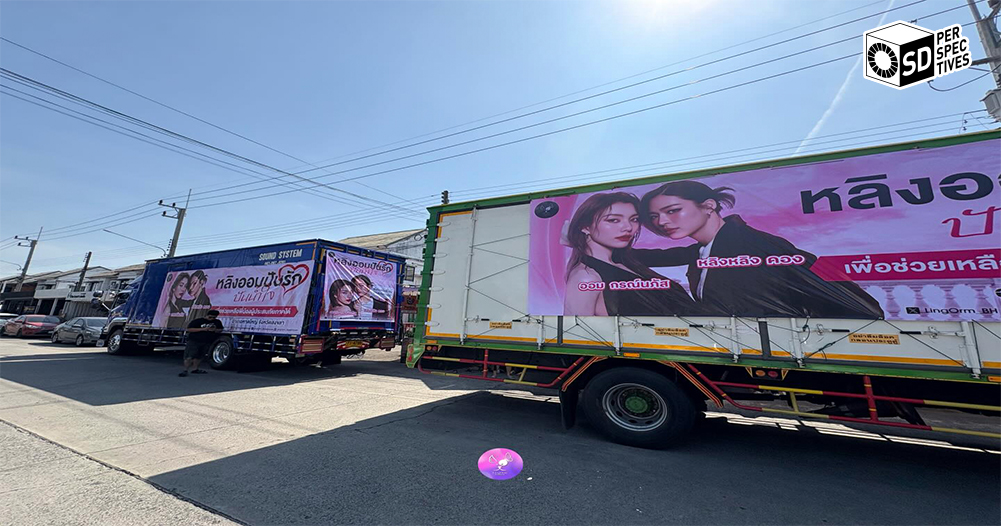
Bangkok,January 7,2026…In the contemporary entertainment business, where “hype” drives everything, most fandoms are often viewed merely as groups of fans cheering for their artists from behind a screen. However, the case of “LingOrm Basehouse,” the official fanbase for the Girls’ Love (GL) series actors “Lingling Kong” and “Orm Kornnass” from Channel 3, has gone far beyond this perception, demonstrating significant capabilities in marketing, management, and social contribution.

The Centralized Global Fandom Model
In less than two years, LingOrm Basehouse has grown into a transnational network. The fanbase boasts over 105,000 accounts on X, 125,000 on Instagram, 50,000 on Facebook, 50,000 on TikTok, and approximately 5,000 members across various OpenChat groups.
LingOrm Basehouse is not just a Thai fandom; it is a cross-border network with dedicated fan clubs in countries like Japan, China, Korea, Indonesia, Singapore, and France, as well as international fans from various regions. These international fans are so familiar with the Basehouse’s system that they can coordinate with local Thai shops themselves. Yet, for major projects like billboards or cheering stands, they centralize their efforts back to the main house in Thailand. This makes the Basehouse’s management model a “Centralized Global Fandom,” a rare sight in the Thai entertainment industry.
SD Perspectives is the first media outlet to officially invite the “LingOrm Basehouse Page Admin” to share the structure and management philosophy of the fandom, offering a unique perspective.
From a Single Tweet to a Professional Base
The genesis of LingOrm Basehouse was not a grand plan. It started with an ordinary person who saw the promotional poster for Channel 3’s first sapphic series in 2024, Jai Sorn Rak , and simply wondered, “Who are these two?” This led to researching their past work and realizing:
“Lingling Kong and Orm Kornnass Setharattana-phong have been in the industry for a while but are not as well-known as they should be. We simply thought we had to maximize their visibility before the series aired, even though we had never met them in person.”
The LingOrm Basehouse admin recounted this initial feeling. Subsequently, a single tweet announcing a desire to organize a Food Support event with a Food Truck for the Jai Sorn Rak set became the starting point for a gathering of over 30 fans who had never met LingOrm but immediately signed up for the project.
The day the Food Truck arrived at the set was the first time the fans saw Ling and Orm in person. It was a pivotal moment that convinced many who normally dislike crowds, avoid public events, or had never seriously “stanned” a Thai artist before, to commit to this path.
“We can’t even say when we fell in love with them, but seeing them in person made us feel like we wanted to do more for them than we had initially planned,” the admin honestly shared.

This meant the initial fan gathering did not end with just the Food Support but became the foundation of the “Basehouse” that would later expand into LingOrm Basehouse.
The Professional Fandom Structure
After the first project, the team began seriously establishing the fandom’s identity. They chose the light purple color from the series poster as the official fandom color, designed a logo, and, crucially, did not operate amateurishly. They sought official approval for the name and logo through a Channel 3 intermediary. Everything was submitted to the channel’s executives for consideration before the use of the name and visual identity was approved.
“We coordinate through the Channel 3 intermediary every time. We never bypass the process or contact the executives directly because we believe this standard is important for both the artists and the channel,” the admin explained.
The relationship structure was clear from the start: LingOrm Basehouse is an independent fandom that coordinates through the channel’s representative, not an official Channel 3 unit, nor is it the artists’ official management team. It is a fanbase with its own operational system.
The core team of LingOrm Basehouse consists of three admins who manage the overall operations, including social media communication, activity concept development, and project planning. The volunteer team assisting them comes from diverse professions, including doctors, nurses, executives, business owners, logistics professionals, designers, office workers, and students. Everyone works with “100% volunteer spirit,” receiving no salary or compensation. All income from X and donations are used exclusively for LingOrm’s activities and social work; no part is converted into personal gain.
“All the work we do is 100% free. We only have one source of income from X, and every baht donated by fans is used only for the artists’ work and aid,” the admin emphasized.
Despite being volunteers, their operational system is no different from a professional marketing team. Roles are divided based on expertise. The admins act as the central hub, receiving information from Channel 3 and LingOrm’s schedule, then delegating tasks to the volunteer team. They prioritize projects, plan for crisis scenarios, and anticipate the potential positive and negative impacts of each activity.
“Every time we plan something, we consider whether we can fix it if a negative impact occurs. If we can’t fix it, we don’t do it. This is the key principle that has allowed the fandom to grow without letting any drama harm the artists.”
Strategic Social Contribution: “Laying the Groundwork Early”
LingOrm Basehouse’s activity selection is strategically designed. Each set of activities includes communication work, public-facing events, and social work that simultaneously enhances the artists’ image. Before the Jai Sorn Rak series aired, the team’s objective was clear: “Maximize the artists’ visibility.”
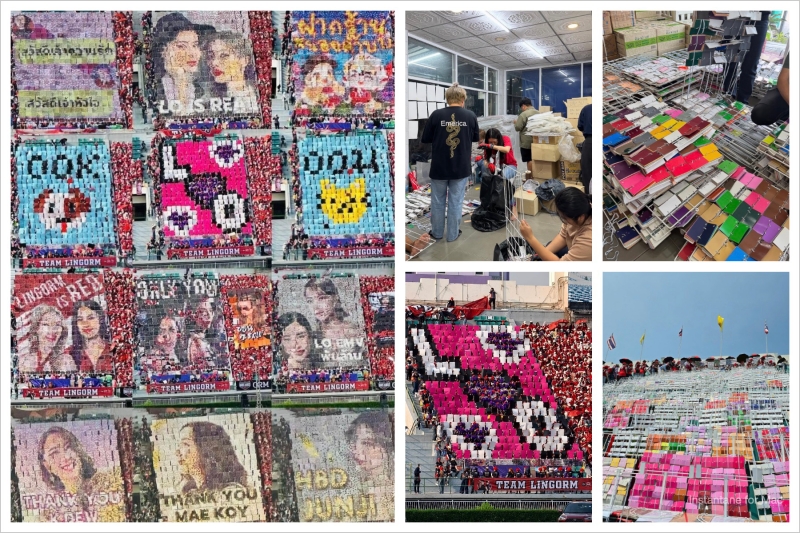
“At that time, we decided to request 100 seats for a cheering stand at the Channel 3 Football event in 2024, even though we weren’t sure if all the seats would be filled. In the end, the stand was full. The first birthday event accommodated 500 seats, followed by a fan meeting with 2,000 seats. All of this happened before the series was fully broadcast. We have a saying in our fandom: ‘Tee Fook Gon’ (Lay the groundwork early). We do it first, we make people see it first—everything related to the artists.”
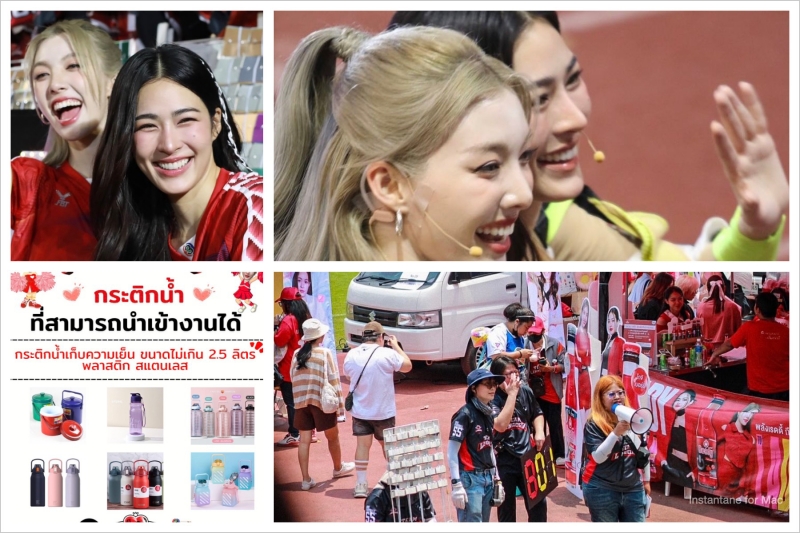
The admin shared this philosophy, which transformed the fans from followers into the originators of the artists’ brand momentum.
When asked about the criteria for selecting activities, from Twitter trends to fan meetings and social work, the admin explained that everything starts with assessing the “timing” and the “fandom’s capacity.” Regular events like the Channel 3 Football event are known in advance, allowing the team to plan the stand concept, publicity, and participant selection over a long period. For fan meetings and birthday events, they consider the fandom’s financial resources, the team’s readiness, and the current mood of the fans.
“For this year’s Channel 3 Football event, the LingOrm Basehouse stand featured a card stunt. We used the same type of plates as Chulalongkorn and Thammasat universities, and we made and repaired the plates ourselves. Fans gathered at the Basehouse and worked on this for one to two months. The card stunt was purely volunteer work—no budget, no deals, no sponsors. The same applied to organizing activities for LingOrm fans at Thephasadin Stadium before moving to Supachalasai Stadium in the afternoon; all volunteers came from various professions.”

The social work, particularly the donation drive for the Hat Yai flood relief, is a clear example of their decision-making in a crisis, leveraging their prior experience from aid efforts under the LingOrm name during floods in Chiang Rai and Nan. The admin recounted:
“The team discussed it around 8 PM on the 25th and agreed to immediately go to the area. In a single night, we designed the artwork, wrote the captions, prepared the transfer system, and figured out the logistics route. When we announced it the next morning, fans poured in with donations. Within a day, we raised nearly 600,000 baht, which was converted into survival bags, bedding, baby supplies, and other necessities. On the day of the announcement, Orm shared the information on X, and Caltex, who has Orm as a presenter, offered one of their gas stations as a collection point for the donated goods. Everything was transported to the area with the help of a six-wheel truck supported by Orm and their network of partners.”
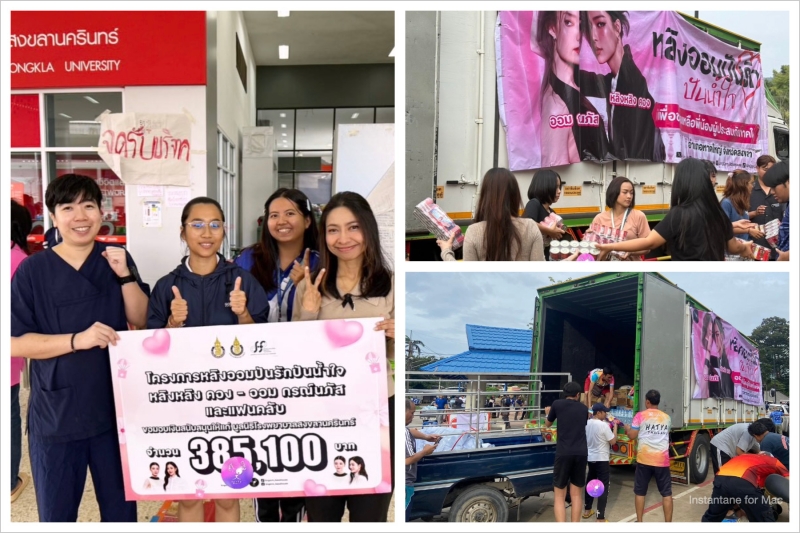
“What we clearly saw from the Hat Yai flood case is that our fandom is very ready to make merit and take real action in a short time. And when the goods arrived in Hat Yai, local student fandom members helped with the distribution,” the admin concluded.
The Relationship with the Artists
Regarding their relationship with Ling and Orm, the admin team emphasized that they are not the artists’ “personal staff” and do not manage their lives. Instead, they act as a “support team” that creates a safe space and generates visibility opportunities from all sectors, including brand owners. Both artists are aware of the fandom’s efforts.

“The artists know what we do, but we never let them bear the burden. If anything goes wrong, we take full responsibility. They simply acknowledge that the fans are doing this with good intentions, and they offer encouragement, such as commenting, ‘I never thought someone would do this much for us.’ Or, when Orm shared the story on Instagram, Caltex saw it and contacted us to offer support. The six-wheel truck and all associated costs were fully supported by Ling and Orm, along with their back-end sponsors. This reinforces the feeling among many fans that the artists value their efforts.”
The Challenge of Growth
Today, as the fandom grows and their shared passion for social contribution deepens, the complexity of their work and the expectations have also risen. The admin openly admitted that “diverse opinions” are the main challenge. Posting a single caption, selecting one image, or deciding on a project now requires multiple layers of thought because it could impact the fandom, the artists, and Channel 3.
“We have become much more thoughtful than before. Every post must consider whether it will affect anyone, whether we can fix it if a problem arises, and we have to ask ourselves if we are doing this because of our feelings or because it is genuinely good for the artists.”
Another challenge is maintaining a balance between their professional careers and their work for LingOrm Basehouse, as the core team must be on standby on social media almost 24 hours a day.
In the final part of the conversation, the admin admitted they could not promise to stay in this position “forever,” but the LingOrm Basehouse team has a clear stance: for the time they are doing it, they will do their best.
“We don’t know how long we can continue to support them, but for the time we still love them, still have the energy, and still want to do it, we will do our utmost only for LingOrm,” the LingOrm Basehouse admin concluded.
This is the voice of a group that started with a single tweet but is now serving as a fan club, a marketing team, and a social volunteer team simultaneously. It reflects how “fandom power” in this era is not just about creating trends on a timeline but can also generate tangible change for the artists, the media, and the communities affected by real-world crises.
Source: All images provided by LingOrm BaseHouse