


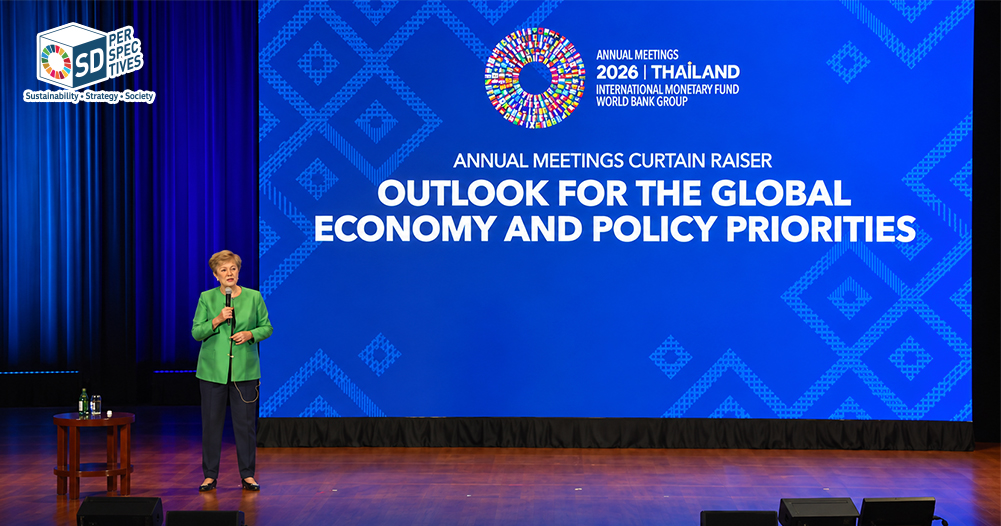
SINGAPORE,October 10,2026…SD Perspectives | #AM2026Thailand Ahead of the 2026 IMF-World Bank Group Annual Meetings in Bangkok, IMF Managing Director Kristalina Georgieva delivered a curtain-raiser address highlighting a global economy pulled in opposite directions: a positive demand shock driven by AI investment versus a negative supply shock in energy markets.
Detailed Breakdown of the Three Key Crosscurrents
1.The AI Boom & Capital Allocation Disparities
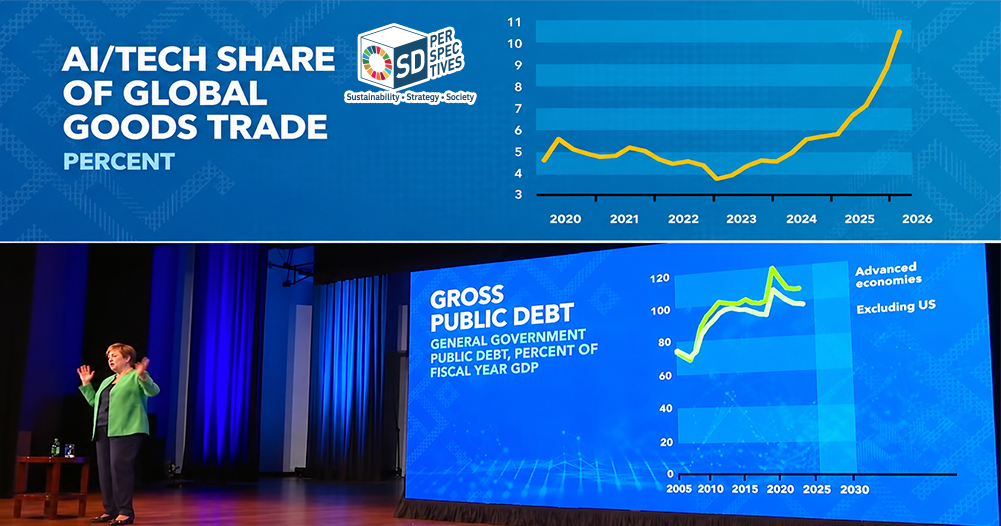
Historic Investment Scale- Global AI investment as a share of GDP is projected to surpass previous major infrastructure revolutions, including railways, electricity grids, and telecommunications. AI hardware and related tech products now account for over 10% of world goods trade.
Widening Global Inequality: Economic gains remain highly concentrated in tech frontrunners—such as the US, China, India, and key Asian chip suppliers—leaving many developing economies bypassed and widening global economic divergence.
Financial Stability Risks: While AI earnings drive equity valuation gains, high leverage among hyperscalers could trigger systemic market shocks if future corporate earnings fall short of expectations.
2.Persistent Energy Shocks, Geopolitical Risks & Climate Pressures
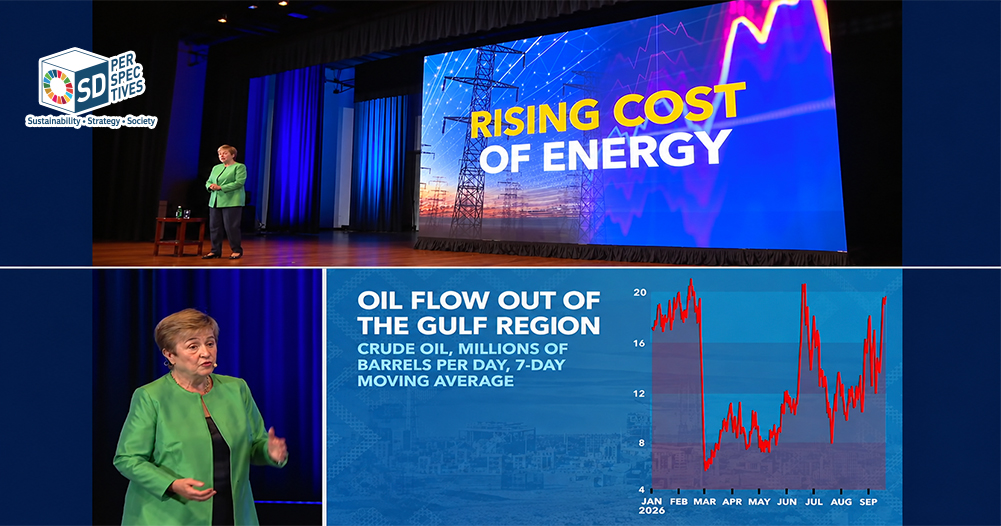
Surging Commodity Inflation: Crude oil prices hovering near $100/barrel, paired with elevated crack spreads from refining bottlenecks, have driven retail diesel and refined fuel costs to record highs.
Food Security Strain via Super El Niño: High energy costs alongside severe climate events like the “Godzilla El Niño” are driving up fertilizer and food prices, disproportionately impacting vulnerable energy-importing nations.
Long-Term High-Yield Environment: Brent futures indicate sustained high energy prices through 2027, pushing sovereign core bond yields (US, German, Japanese 10-year yields) to their highest levels since 2007–2008.
3.Record Public Debt & The Death of $R < G$ Complacency
Global Public Debt Exceeding 100% of GDP: Global public debt is approaching post-WWII highs, driven primarily by advanced economies with massive debt overhangs.
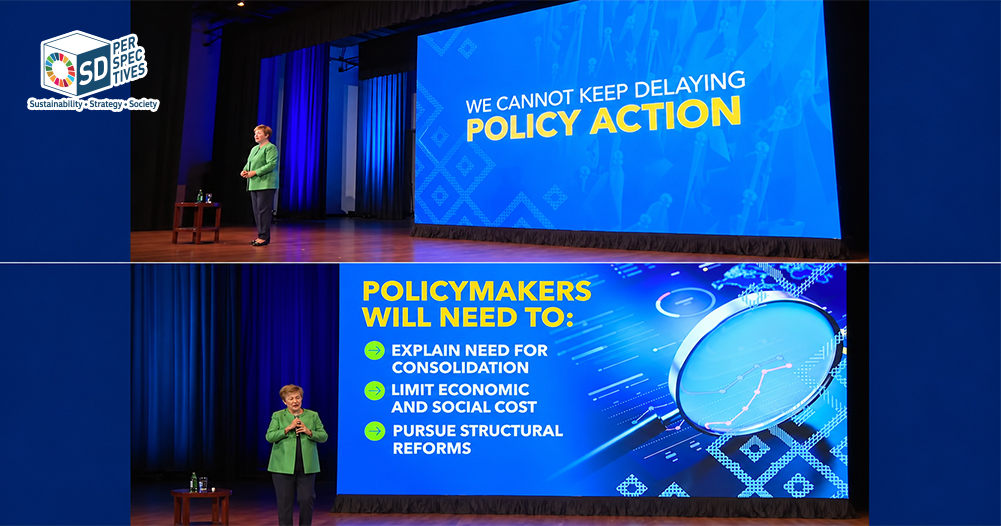
Structural Shift in Interest-Growth Differential ($R – G > 0$): After 17 years of low interest rates relative to GDP growth ($R < G$), core yields now exceed growth rates ($R > G$). Policymakers can no longer rely on economic expansion alone to erode public debt without active fiscal consolidation.
Key Policy Imperatives & Climate Finance Focus
-Monetary Policy & Central Bank Independence
Central banks must preserve independence and remain steadfastly focused on price stability, resisting subtle forms of fiscal dominance or market stabilization pressures.
-Fiscal Consolidation & Spending Efficiency
Authorities must execute credible medium-term fiscal adjustment plans. Enhancing public expenditure efficiency—learning from top-performing peers—can unlock significant fiscal space while safeguarding vulnerable populations.
-Structural Reforms & AI Readiness
Deregulate obsolete rules, enhance workforce reskilling, foster capital access, and establish AI regulatory guardrails to convert initial infrastructure capital expenditure into long-term total factor productivity.
-Climate Finance & Energy Transition Resilience
Synergizing AI & Clean Energy Demands The exponential energy requirements of AI data infrastructure necessitate accelerated Climate Finance deployment toward renewable energy integration and energy efficiency.
Concessional Financing for Vulnerable Nations Debt-distressed and low-income countries require global cooperation and concessional climate financing to ensure debt servicing costs do not crowd out essential adaptation and green transition investments.
Source
SD Perspectives | Thailand’s Sustainability & Business Strategy Media
SD Perspectives delivers news and analysis on ESG, Nature & Biodiversity, Sustainable Finance, Business Strategy, and DEI—helping Thai leaders, investors, and organizations understand emerging risks, opportunities, and the chs, opportunities, and the changing direction of global business.