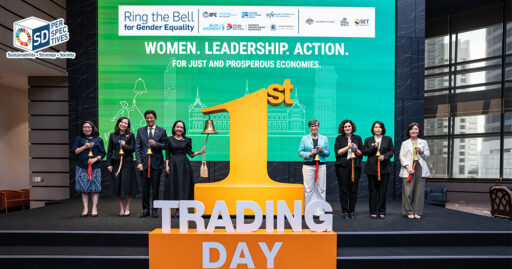
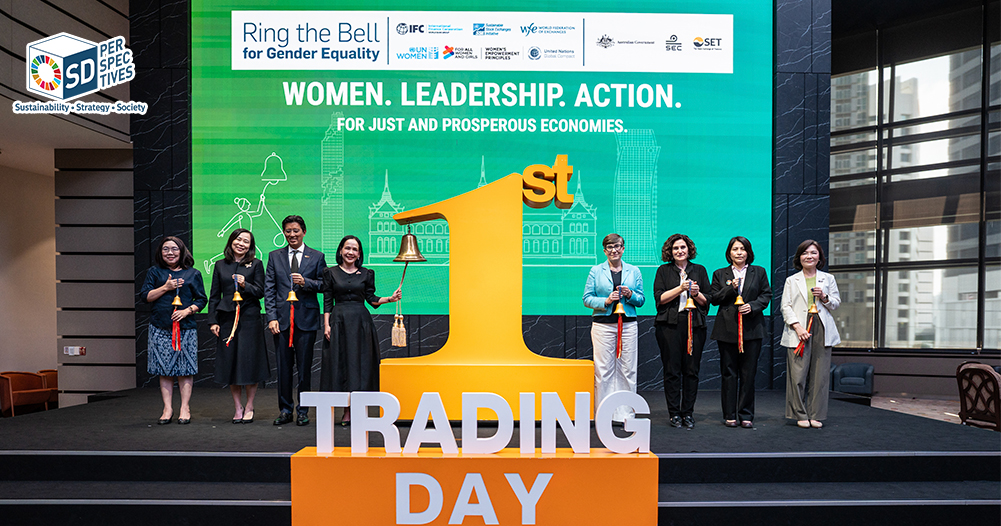
Bangkok,March 19,2026…Gender Equality is no longer a standalone social agenda. In Thailand’s capital market, it is increasingly positioned as a core economic strategy, linking women’s leadership with inclusive supply chains, capital access, and long-term business resilience.
Asadej Kongsiri, President, The Stock Exchange of Thailand ,Dr. Pornanong Budsaratragoon, Secretary-General, the Securities and Exchange Commission, Thailand
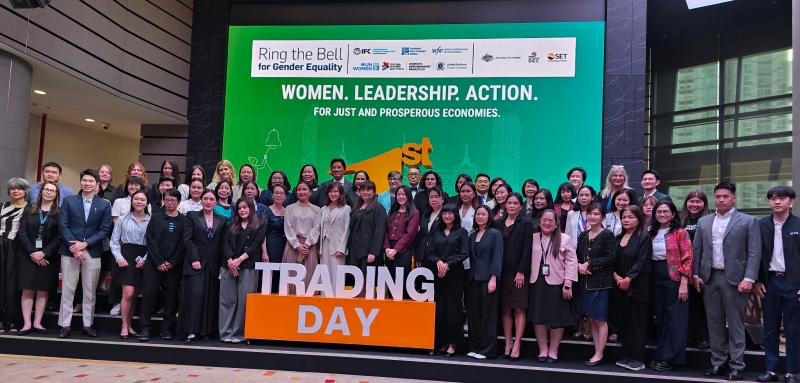
,H.E. Dr. Angela Macdonald, Australian Ambassador to Thailand ,Christine Arab, Regional Director of UN Women Regional Office Asia & Pacific and UN Women Representative to Thailand,Jane Yuan Xu, Country Manager for Thailand and Myanmar,Dr. Kuanruthai Siripatthanakosol UN Global Compact Network Thailand: Gender-Inclusive Supply Chain @ The “Ring the Bell for Gender Equality 2026”
Initiative highlights a structural shift: how capital markets, regulators, and corporations are translating gender equality into measurable economic outcomes. The global campaign led by organizations including the World Federation of Exchanges, IFC, UN Women, and UN Global Compact has mobilized over 100 stock exchanges worldwide, reinforcing the role of markets in advancing women’s economic empowerment.
At the center of this year’s agenda is the theme “Women’s Leadership for Just and Prosperous Economies”, emphasizing that leadership diversity is not only about representation, but about how economic opportunities are distributed across systems—from boardrooms to supply chains.
From Gender Equality to Economic Infrastructure
New regional data on women in corporate leadership across Asia shows progress, but also persistent gaps. The implication is clear: without structural changes, gender equality will remain incremental rather than transformative.
In response, capital markets are moving beyond disclosure toward action-oriented mechanisms, particularly in three areas:
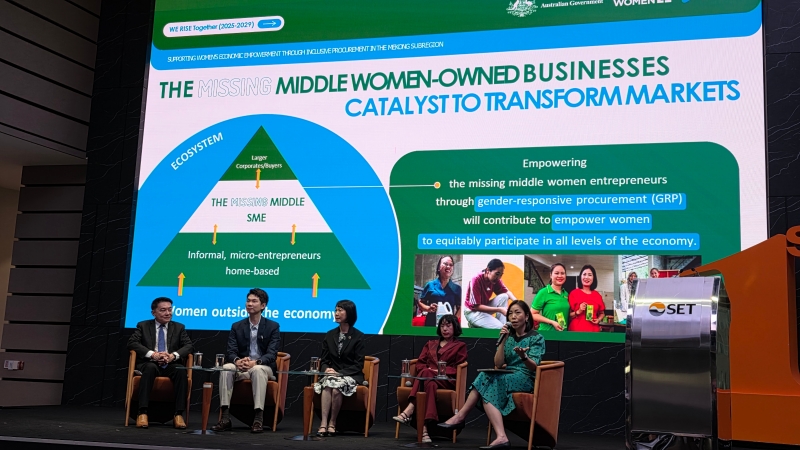
Inclusive supply chains that integrate women-led enterprises, including MSMEs, into corporate procurement systems
Gender-responsive procurement (GRP) to expand market access and supplier diversity
Sustainable finance platforms, such as the newly established Asia-Pacific Sustainable Finance Lab (2025), designed to accelerate gender-focused capital market solutions
These mechanisms aim to ensure that women entrepreneurs can access, participate, and scale within markets, rather than remain at the margins.
Inclusive Supply Chains as a Competitive Advantage
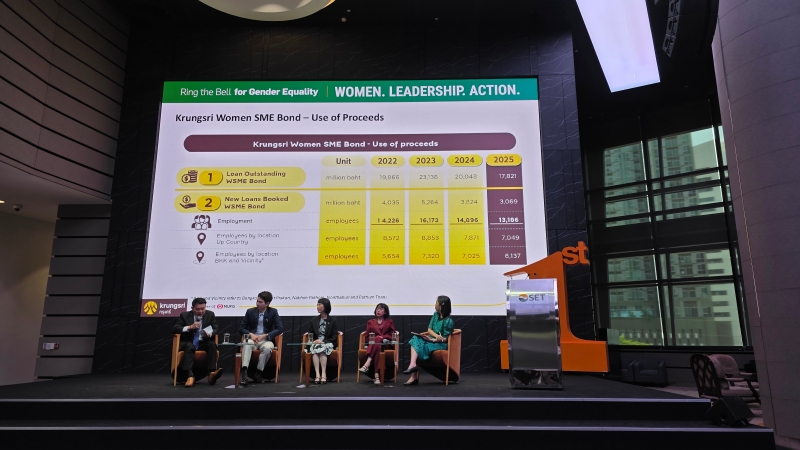
The shift toward inclusive supply chains reflects a broader realization: economic inclusion is directly linked to resilience and long-term growth.
When women-owned businesses are integrated into supply chains:
Local economies expand beyond urban centers
Supplier bases become more diversified and resilient
Companies gain access to new innovation and talent pools
This aligns with regional initiatives such as WE RISE Together, which supports gender-responsive procurement across the Mekong subregion (Thailand, Vietnam, Cambodia, and Laos), aiming to connect women-led businesses with large corporate buyers and cross-border opportunities.
Capital Markets as System Designers
In Thailand, the initiative underscores how capital markets function as system designers, shaping incentives, governance standards, and corporate behavior.
As ESG becomes embedded in investment decisions, gender-related indicators—including leadership diversity, pay equity, and inclusive supply chains—are increasingly treated as part of corporate accountability and long-term performance metrics.
This signals a transition from:
ESG as reporting framework to ESG as economic infrastructure
From Commitment to Execution
The next phase of Gender Equality in business is not about commitments, but execution.
Key priorities emerging from the initiative include:
Embedding inclusive procurement into core business operations
Expanding access to finance for women-led SMEs
Strengthening transparency through measurable ESG indicators
Aligning regulators, investors, and corporations around shared targets
The objective is clear: turn policy into daily business decisions—from supplier selection to capital allocation.
A New Economic Model
In an era of rising inequality and economic uncertainty, the concept of an “opportunity economy” is gaining traction one where access to markets is not limited by gender, geography, or scale.
Women’s leadership plays a defining role in this transition. Not only in boardrooms, but across entire economic systems shaping how value is created, distributed, and sustained.
For Thailand, this represents more than a social milestone. It is a strategic inflection point:
When Gender Equality moves into supply chains and capital markets, it becomes a driver of national competitiveness.