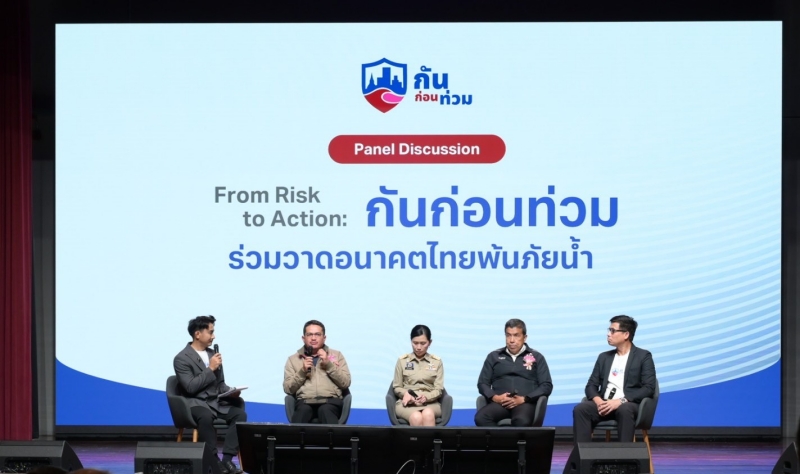
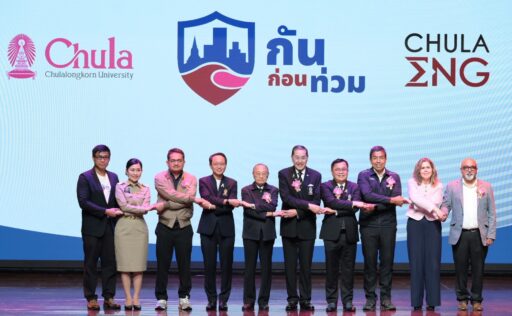
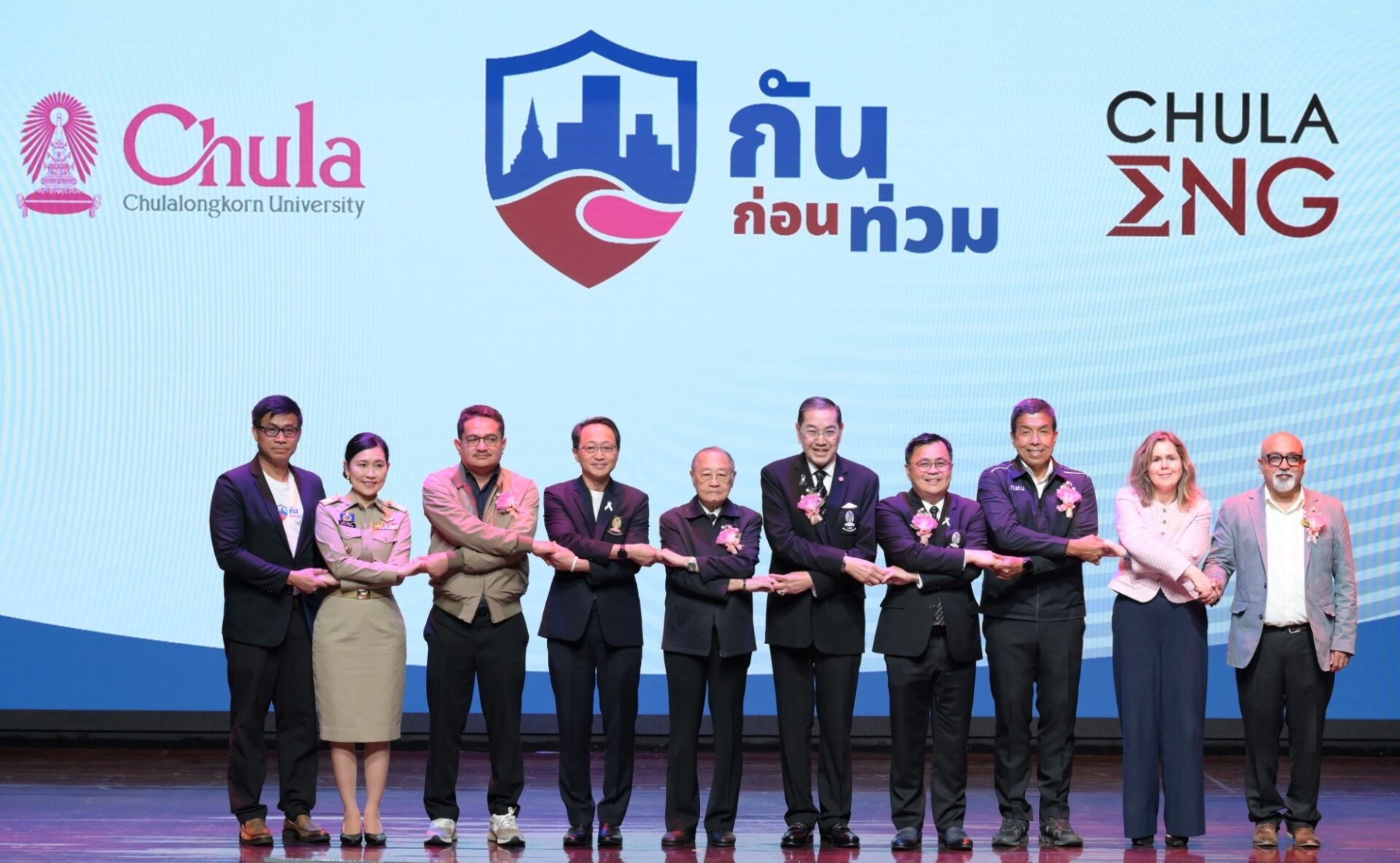
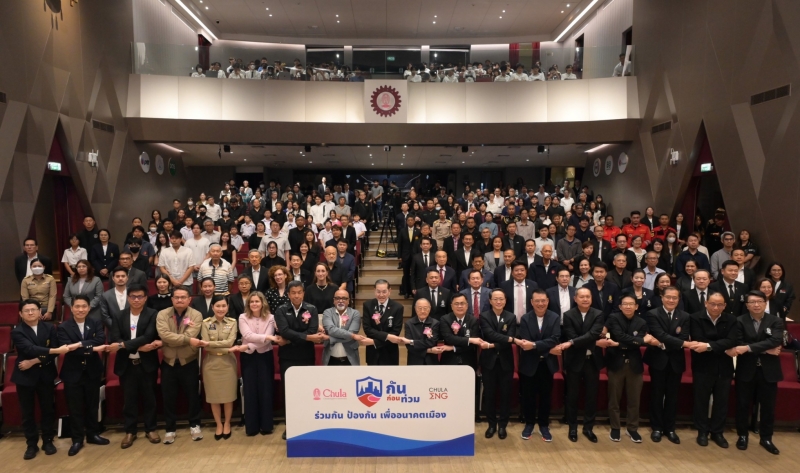
Bangkok,February 2 , 2026…Chulalongkorn University, in collaboration with the public and private sectors, academia, and international experts, hosts the forum “Water Resilience: Urban Adaptation under Climate Volatility” at the Engineering Auditorium, Chulalongkorn University.
The forum seeks to present pathways for Thailand’s cities to survive and adapt, proposing a five-dimensional plan to elevate the country’s capacity to manage water crises through a systematic preventive approach. This approach emphasizes the use of a single, unified national data set, planning and command based on river basin systems rather than ministerial or provincial boundaries, and the integration of budgets, policies, and responsibilities.
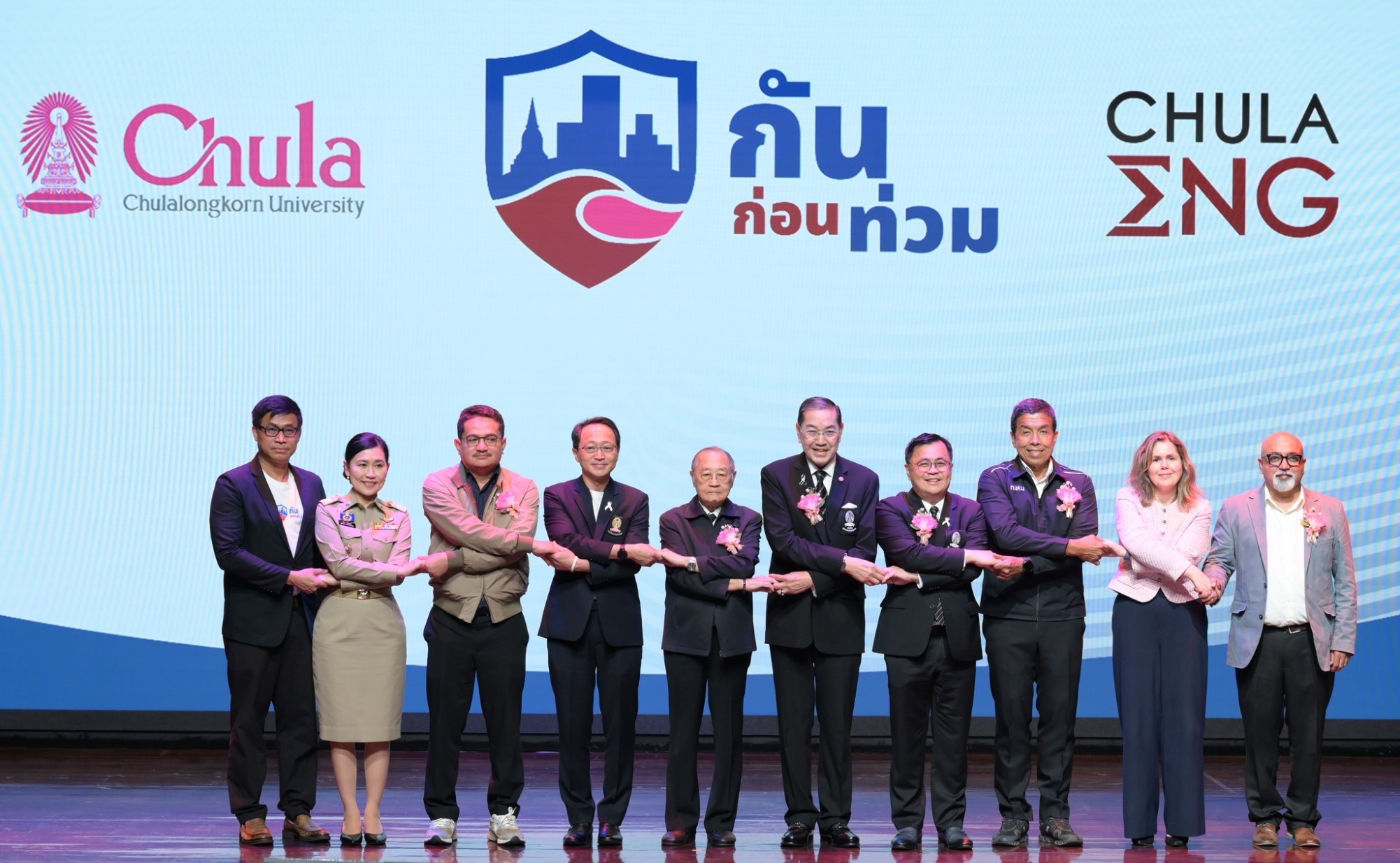
Professor Dr. Surakiart Sathirathai, Chairman of the Chulalongkorn University Council Professor Dr. Wilert Puriwat, President of Chulalongkorn University Dr. Sumet Tantivejkul, Chairman of the Chaipattana Foundation under Royal Patronage and Associate Professor Dr. Witaya Wannasuphoprasit, Dean of the Faculty of Engineering at the same time, the “Water Resilience” Center has been officially established as a central mechanism to coordinate knowledge, research, data, and public communication, with the aim of protecting cities and safeguarding the future of the next generation.
Dr. Witaya explained that Thailand is facing increasingly severe climate patterns, driven by upstream floodwaters, sea-level rise, extreme rainfall, and prolonged rainfall events.
As much as 80% of annual rainfall can now fall within a single area in just one week, creating unprecedented risks of flash flooding. The impacts are wide-ranging, affecting both economic stability and quality of life. The 2011 Great Flood caused damages totaling 1.43 trillion-baht, equivalent to 70% of the national budget that year, with over 90% of losses borne by the private sector, including direct damages and lost business opportunities.
The “Water Resilience” Center is tasked with communicating and coordinating proactive water-risk prevention based on scientific data, strengthening collaboration across all sectors without duplicating or replacing government functions. Its goal is to reduce losses from water-related crises and enhance long-term urban resilience.
Five Dimensions Toward a “Resilient Metropolis (and Nation)”
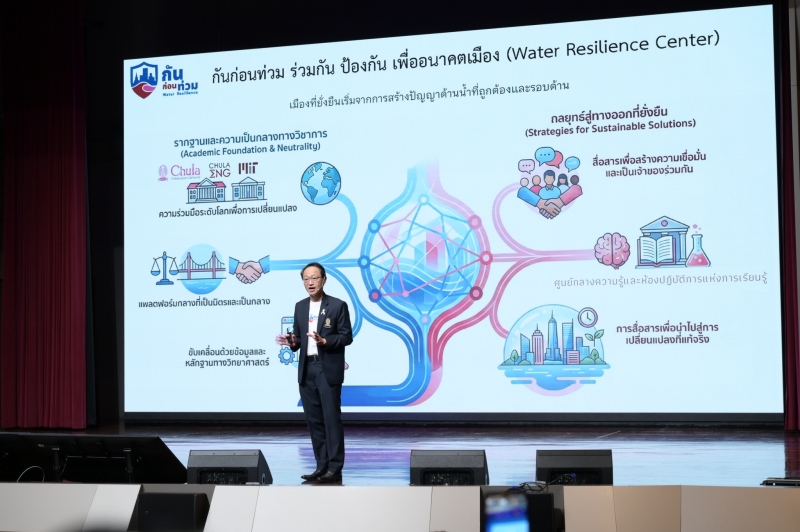
Dr. Witaya proposes a five-dimensional framework to manage long-term water risks through integrated infrastructure, technology, innovation, and social participation:
Dimension 1: Reinforced Engineering Infrastructure (Reinforced)
Strengthening existing infrastructure—including drainage tunnels, river embankments, and pumping stations—by integrating advanced forecasting models, artificial intelligence (AI), real-time data, and digital systems. This enables accurate early prediction and effective preparedness to cope with extreme rainfall events under increasingly volatile climate conditions.
Dimension 2: Integrated River Basin Management (Integrated)
Expanding flood and drought mitigation from the urban scale to the river basin level through the application of hydrological and hydraulic modeling, big data analytics, AI, and satellite technologies. This approach enables early assessment of both excess water volumes and water scarcity risks, supporting proactive water management before flows reach Bangkok. In particular, the Lower Chao Phraya River Basin Flood Mitigation Plan is emphasized to ensure that urban safety does not rely solely on measures within city boundaries.
Dimension 3: Global Innovation and Lessons Learned (Inspired)
Learning from international best practices, such as the Netherlands’ coastal defense systems, Japan’s massive underground drainage tunnels, and sponge city concepts from China and Singapore, while integrating local wisdom and adapting solutions to Thailand’s context.
Dimension 4: Adaptive Living with Water (Adaptive)
Shifting from “fighting water” to “living with water” through blue-green infrastructure, flexible urban planning, and strengthening public climate literacy.
Dimension 5: Evidence-Based Water Governance and Decision-Making (Evidence-based)
Using research and spatial data to inform policymaking, develop context-specific innovations that create economic opportunities, and foster collaboration among government, private sector, and communities—ensuring targeted and sustainable risk prevention.
In addition, Chulalongkorn University has partnered with the Massachusetts Institute of Technology (MIT), USA, to develop an integrated, technology-driven water management project that enhances economic value alongside environmental conservation. The initiative is being piloted in four provinces representing different segments of the river basin:
-Nan (Upstream): Conserving watershed forests and reducing disaster risks to mitigate economic impacts.
-Chainat: Promoting behavioral change among farmers to increase income while reducing vulnerability to floods and droughts.
-Nakhon Pathom: Improving water quality management to enhance the province’s economic value.
-Bangkok: Developing accurate and rapid rainfall monitoring and forecasting systems to strengthen urban safety.
Water-related disasters are not merely about damaged homes or property—they can destroy entire lives, eroding educational opportunities, mental health, family stability, and long-term social security while deepening inequality. The stakes are especially high for Bangkok: if flooding hits the city’s inner economic zones, losses could reach 10 million baht per minute, with social consequences that cannot be fully measured.
If we know in advance, prepare in advance, and cooperate in advance, many losses can be avoided. This is why we must all act together to “Water Resilience”, starting today—to protect our cities and secure the future of our children.